Event Planner Goals and Objectives give an event a clear purpose before the venue, programme, or suppliers are selected. They connect audience experience with commercial value, operational control, and measurable outcomes. When planners define success early, budgets become easier to prioritise, teams understand their responsibilities, and post-event reporting becomes more useful. The result is an event designed around decisions and outcomes, not activity alone.
What Are the Core Event Planner Goals and Objectives Every Professional Must Define?
- Every plan should cover audience value, business impact, operational performance, and post-event follow-up. Well-defined Event Planner Goals and Objectives clarify what attendees should gain, what the organisation expects, and how success will be measured.
-
Effective goals tied to the objectives of an event management company usually cover engagement, qualified leads, revenue, satisfaction, budget control, schedule accuracy, and useful data for future campaigns.
What Is the Real Difference Between Event Planner Goals and Objectives?
- A goal states the broad result, such as strengthening client relationships. An objective turns it into a measurable commitment, such as securing 30 qualified meetings by the end of the event.
- The goals and objectives of an event work together: one provides direction, while the other defines the target, deadline, and evidence required.
Why Do Event Planner Goals and Objectives Fail Without a SMART Framework?
- Targets such as “increase engagement” are too vague to guide planning. A SMART objective specifies the audience, expected improvement, measurement method, and deadline.
- Use this framework to keep each objective specific, measurable, achievable, relevant, and time-bound.
How Do Event Planner Goals and Objectives Differ Across Corporate, Fundraising, and Exhibition Events?
- Corporate events may prioritise alignment, retention, or product education. Fundraising events focus on donor conversion and contribution value, while exhibitions measure qualified traffic, demonstrations, meetings, and sales opportunities.
- These differences shape event planning goals, content, staffing, venue layout, and calls to action.
Explore exhibition and conference management when strategy, design, setup, and on-site delivery must work towards one result.
What KPIs Should Event Planners Set to Measure Their Goals and Objectives?
Choose indicators that reflect the event’s purpose rather than reporting every available number.
| Objective | KPI | What It Shows |
| Attendance | Attendance rate | Promotional effectiveness |
| Engagement | Participation or dwell time | Experience relevance |
| Commercial return | Leads or revenue | Business contribution |
| Satisfaction | Feedback score | Delivery quality |
| Operations | Budget and schedule variance | Planning control |
| Follow-up | Conversion rate | Post-event value |
The right KPIs turn Event Planner Goals and Objectives into evidence that decision-makers can assess.
How Do Event Planner Goals and Objectives Drive Attendee Satisfaction and Revenue at the Same Time?
- Useful content, clear navigation, relevant networking, and responsive teams improve the experience while encouraging valuable actions.
- The objectives of event planning should connect each experience decision to a commercial step, such as booking a meeting, requesting a proposal, or registering interest.
- Visual elements such as branded signage, banners, and on-site displays also shape first impressions, which is why many planners rely on dedicated advertising and printing services to support this experience.
What Are the Most Common Mistakes That Undermine Event Planner Goals and Objectives?
- Common mistakes include setting too many priorities, measuring attendance without audience quality, choosing KPIs too late, and failing to assign ownership.
- Professional event planner objectives also require a follow-up plan; otherwise, leads, feedback, and relationships lose value after the event.
How Do Short-Term Event Planner Goals and Objectives Feed Into Long-Term Business Growth?
-
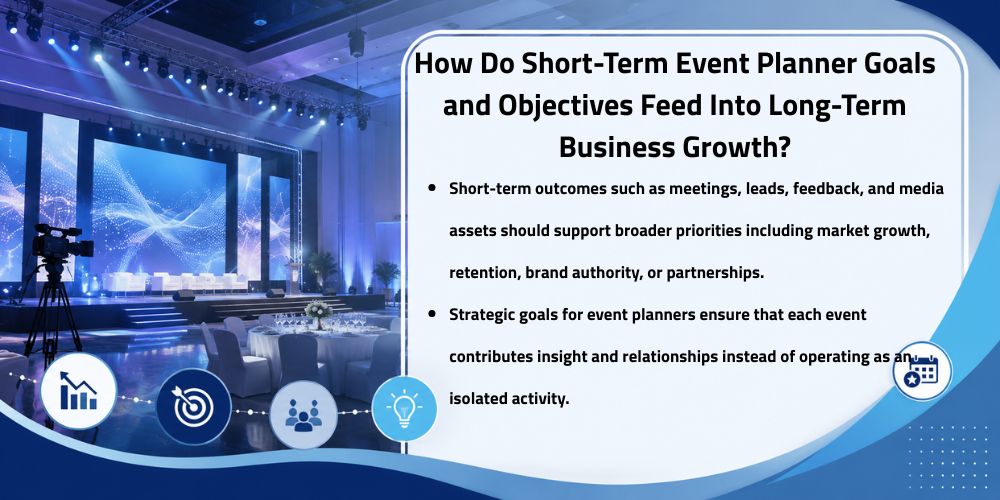
Short-term outcomes such as meetings, leads, feedback, and media assets should support broader priorities, such as event planning ideas for business growth, retention, brand authority, or partnerships.
- Strategic goals for event planners ensure that each event contributes insight and relationships instead of operating as an isolated activity.
How Should Event Planner Goals and Objectives Shift for Virtual and Hybrid Events?
- Virtual and hybrid events require separate measures for remote and on-site audiences, including viewing time, digital interaction, technical stability, and follow-up behaviour.
- Both experiences should support the same outcome through aligned content, coordinated moderation, and one reporting structure.
What Tools Do Professional Event Planners Use to Track Their Goals and Objectives in Real Time?
- Useful tools include registration platforms, CRM systems, QR tracking, event applications, live surveys, budget dashboards, and project management software.
- Select tools according to the decisions they support. Real-time data should help teams adjust flow, staffing, capacity, timing, or communication while action is still possible.
How Do Event Planner Goals and Objectives Connect to an Organisation’s Overall Business Strategy?
- An event should support an existing priority, such as market entry, client retention, product adoption, employer branding, or internal alignment.
- Event planning business objectives become stronger when they use the same performance language and commercial priorities as the wider organisation.
What Are the Strategic Event Planner Goals and Objectives That Matter Most in the Saudi Market?
- Saudi events require attention to regulatory readiness, cultural relevance, bilingual communication, accessibility, supplier coordination, and high-quality visitor experiences.
- Event Planner Goals and Objectives should also support measurable economic and organisational value.
Eda’at Alaibida’ connects these priorities through planning, design, technical setup, printing, advertising, and field execution.
How Does an Event Planning Mission Statement Shape the Goals and Objectives of a Planner?
- A mission statement explains the value the planner intends to create and the audience being served. It helps the team choose between competing creative, operational, and commercial options.
- A clear event planning purpose and goals statement keeps delivery focused on a consistent promise.
Reviewing strong event management vision statement examples can help planners keep delivery focused on a consistent promise.
How Do Event Planner Goals and Objectives Change When the Audience Is External Rather Than Internal?
- External events often target acquisition, reputation, partnerships, media reach, or revenue. Internal events may focus on learning, recognition, culture, communication, or organisational change.
- Performance goals for event planners should therefore reflect the behaviour expected from the specific audience, not a generic engagement target.
What Separates Measurable Event Planner Goals and Objectives From Ones That Look Good on Paper?
- A measurable objective has a baseline, target, owner, deadline, and trusted data source. It also states what decision will follow the result.
- An objective that cannot influence budget, content, staffing, or follow-up may sound impressive but offers little operational value.
Conclusion
Effective Event Planner Goals and Objectives connect creative planning with audience value, operational discipline, and business impact. The planner’s task is to convert broad ambitions into clear targets, responsibilities, and indicators that remain visible throughout the delivery process. Eda’at Alaibida’ supports organisations through integrated planning, exhibition and conference management, technical coordination, visual materials, advertising, and on-site execution.
Build your next event around measurable objectives with Eda’at Alaibida’.